Am I a Good Candidate for EndoLift?
A practical guide to the kind of patient who tends to benefit from EndoLift and how candidacy is really assessed.
One of the most common questions patients ask is whether EndoLift is actually right for them.
That’s an important question, because EndoLift is a very strong treatment for the right person — but it is not a universal answer for every face, every age, or every degree of skin laxity.
In general, a good EndoLift candidate is someone who wants noticeable tightening and contour improvement, but is not ready for surgery.
That often includes people who are starting to see:
- early jowling
- softness along the jawline
- under-chin fullness
- skin laxity through the lower face
- neck looseness that makes the face feel less defined
Many of these patients are in the stage where they know filler alone won’t solve the issue, but they also don’t want the downtime, cost, or invasiveness of a facelift.
That is where EndoLift can become very compelling.
The best candidates usually want improvement in contour, structure, and tightness — not a dramatically different face. They’re looking for a more defined jawline, a firmer lower face, or a tighter neck, while still keeping a natural appearance.
A strong candidate also needs realistic expectations. EndoLift can create meaningful improvement, but it should be chosen for the right reasons. If someone has very advanced laxity or is hoping for a surgical-level transformation, a consultation may lead to a different recommendation.
Skin quality, facial anatomy, and treatment goals all matter. So does the provider’s ability to judge whether EndoLift is the best tool, or whether another path would make more sense.
That’s especially important because not every lower-face concern is really a skin-tightening issue. Sometimes the problem is structural volume loss. Sometimes it’s soft tissue descent. Sometimes it’s a combination. The treatment plan has to match the reason the face is changing.
This is why candidacy cannot be decided from a generic checklist alone.
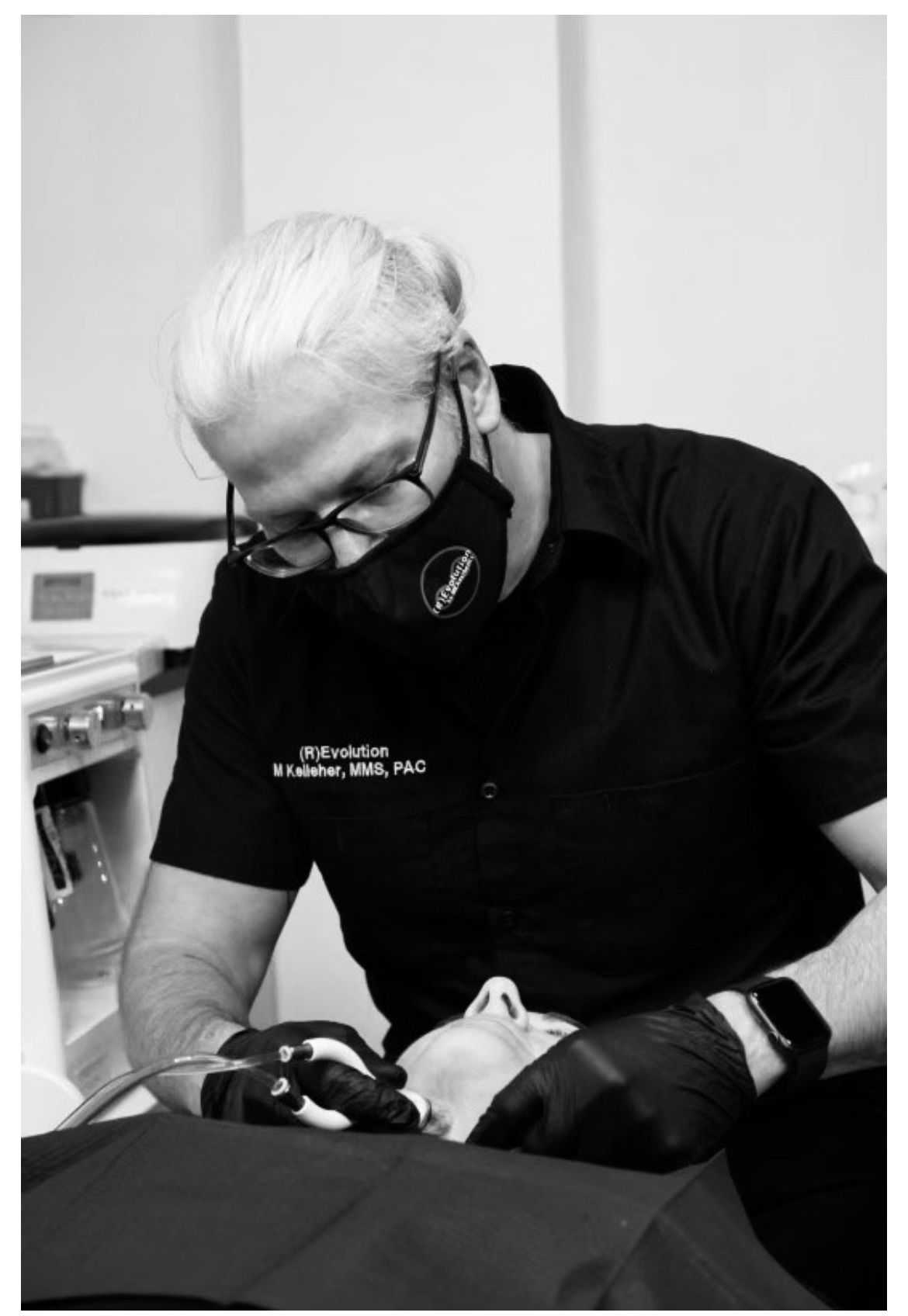
At (R)Evolution MedSpa, candidacy for EndoLift is based on a consultation that looks at:
- the degree of laxity
- the treatment area
- facial structure
- skin quality
- how much lift the patient is hoping to achieve
- whether another treatment or combination approach would perform better
The right candidate is not simply someone who wants EndoLift.
It’s someone whose anatomy, goals, and expectations all line up with what the treatment is designed to do well.
If you’re not sure whether you fall into that category, the best next step is a consultation. That’s where the real answer lives.
Explore the EndoLift treatment page or compare EndoLift vs facelift surgery.